The House That Cools Itself
How sunlight, water, metal, and airflow can help cool a desert home without electricity
Arizona heat is relentless.
In the summer, temperatures can climb past 110 degrees, and most homes respond the same way. They close up, turn on the air conditioning, and depend on mechanical cooling all day long.
But what if a house could use the desert climate to help cool itself?
That is the idea behind one of the most fascinating design features in the Bars & Bridges home. Instead of treating the Arizona sun as the enemy, the home uses sunlight, shade, water, metal, and air movement to create a passive cooling system.
The concept is surprisingly simple.
Water helps cool the air below the home. The sun heats a metal screen on the outside of the home. The hot air rises. That rising air helps pull cooler air into the house.
In other words, the house is designed to breathe.
Using Heat to Move Air
The most surprising part of this system is that one exterior surface is designed to get hot.
That sounds backwards in Arizona, but heat is what makes the system work. When the sun heats the exterior metal screen, the air behind it warms up and rises. As that warm air moves upward and exits near the top, it creates a natural draft.
That draft helps pull cooler air from below.
The hotter the sun gets, the more the system wants to move air.
The Roof Overhang Blocks the Summer Sun
The first part of the system is the roof overhang.
Its angle is designed around the seasonal path of the sun. In summer, when the sun is high in the sky, the overhang helps block direct sunlight from entering the main living spaces.
In winter, when the sun sits lower, light can reach deeper into the home and provide natural warmth.
One architectural move does two things. It blocks heat in summer and welcomes warmth in winter.
That is passive solar design. The house is not just sitting in the desert. It is responding to the sky.
The Wash and Water Feature Cool the Air Below
The home spans a natural desert wash.
When complete, water will move through the wash beneath the home. That shaded water feature is more than a landscape detail. It is part of the cooling strategy.
As air moves across water, some of the water evaporates. In a dry desert climate, that evaporation can help lower the air temperature. It is the same basic idea behind evaporative cooling.
Because the water feature sits below the home in a shaded zone, the air in that area can be cooler than the exposed desert air around it. A natural breeze moving through the wash can pick up that cooler, slightly moister air and carry it toward the home.
That cooler air becomes the source air for the passive cooling system.
The Metal Screen Becomes a Modern Cooling Tower
On the exterior of the home, corrugated perforated metal screen panels will attach to the steel frame.
This screen is not just decorative. It is part of the cooling system.
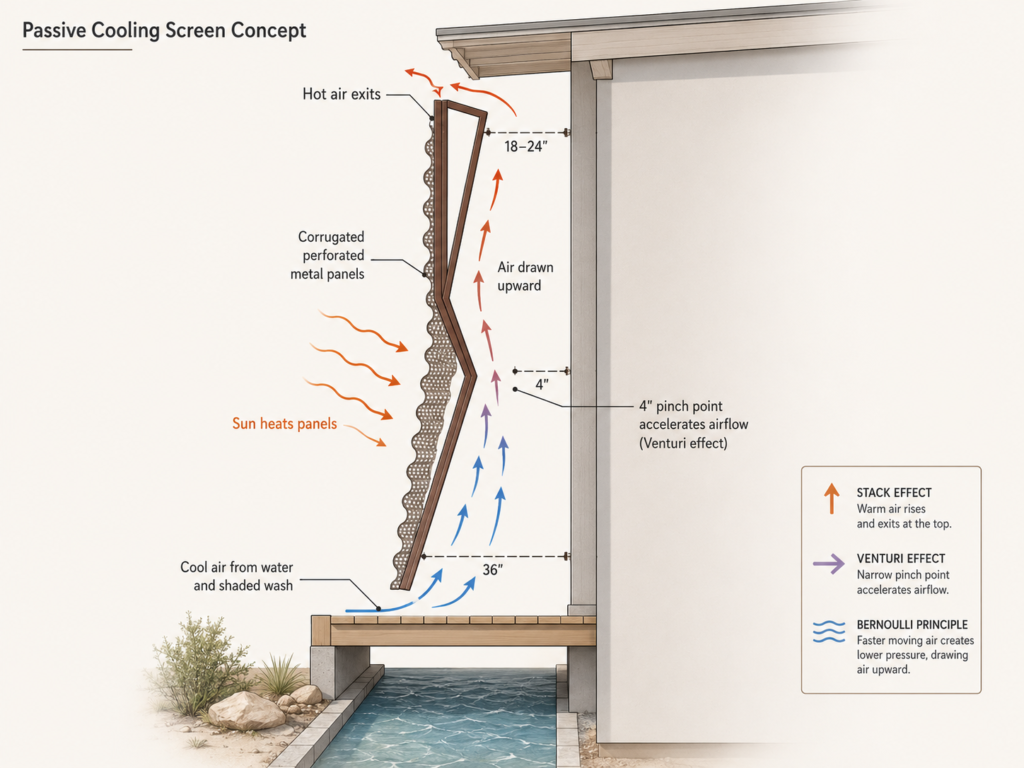
As the sun heats the metal, the screen heats the air in the vertical cavity behind it. Warm air rises through that cavity and exits near the top. As it leaves, it helps draw cooler air from below.
The screen assembly is also shaped with a pinch point. It is wider at the bottom, narrows through the middle, then opens again near the top. When air moves through a narrower space, it speeds up, which helps strengthen the upward draft.
The shape of the architecture is doing the work.
The Brilliant Physics Behind the System
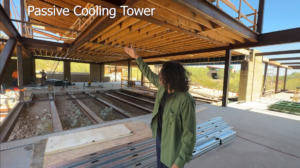
In the video at the top of this page, architect Amit Upadhye explains that the system uses three physics principles at the same time: stack effect, Venturi effect, and Bernoulli principle.
The terms may sound technical, but the basic idea is easy to understand.
Stack Effect
Warm air rises.
When the metal screen heats the air behind it, that warm air moves upward through the vertical cavity. This creates a chimney-like draft that helps pull air from below.
Venturi Effect
Air speeds up when it moves through a narrower opening.
The pinch point in the screen assembly helps accelerate the rising air. That faster movement strengthens the draft and helps the system pull air upward more efficiently.
Bernoulli Principle
Faster moving air is associated with lower pressure.
As the air accelerates through the system, pressure differences help pull cooler air from the shaded wash and water feature toward the home.
Amit’s brilliant insight is that the home does not need to fight every part of the desert climate. It can use the desert sun as the force that helps the house breathe.
How the Cooling Cycle Works
Here is the system in simple terms:
- The roof overhang blocks high summer sun.
- The shaded wash and water feature help cool the air below the home.
- A natural breeze moves cooler air toward the house.
- The sun heats the exterior metal screen.
- Warm air rises through the screen cavity.
- The pinch point helps accelerate the rising air.
- Warm air exhausts near the top.
- Lower pressure helps draw cooler air into the home.
The most interesting part is that the sun is not just creating heat. It is helping power the airflow.
Why This Matters
In Arizona, cooling is one of the biggest challenges in residential design.
Air conditioning is still important, especially in a modern luxury home. But passive design can help reduce the burden on mechanical systems by using the building itself more intelligently.
This cooling tower concept shows a different way of thinking. Instead of relying only on machines, the home uses the path of the sun, the shape of the building, the movement of air, the cooling effect of water, and the thermal behavior of metal.
It feels ancient and futuristic at the same time.
Ancient, because desert cultures have used shade, water, and airflow for centuries.
Futuristic, because this version is built into a modern steel, concrete, and glass home with precise architectural intent.
This is a house designed not just to stand in the desert, but to breathe with it.
Bars & Bridges is not just a home. It is a study in architecture, engineering, desert design, and modern luxury.
To learn more about this one-of-a-kind Arizona residence or to schedule a private conversation, contact Michael Hankerson and the Hankerson Team.
Michael Hankerson | Hankerson Team | Luxury Division
602.770.7205
[email protected]
More Articles About This Home
Modern Architectural Version of a Passive Cooling Tower
What if a house in the Arizona desert could use sunlight, water, metal, and airflow to help cool itself without electricity? This passive cooling system turns heat into movement.
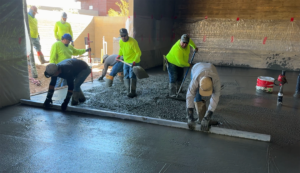
Concrete Pour at a One-of-a-Kind Ultra Luxury Arizona Home
Behind every exceptional home is an incredible amount of planning, coordination, engineering, and craftsmanship. What looks like a simple concrete pour is actually a major milestone that requires timing, experience, and remarkable attention to detail. In a home of this caliber, every level matters.
Why Homes Like This Matter
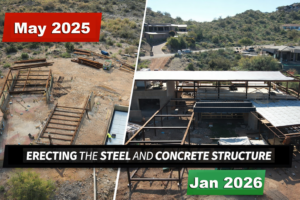
Over the past eight months, the scale of this home has become unmistakable. Steel and concrete now rise from the site in a way that makes clear this is not a typical build. Homes of this caliber are rarely undertaken and often take years to complete, making ownership as much about patience and permanence as design.
A Modern Architectural Estate Rising in Paradise Valley
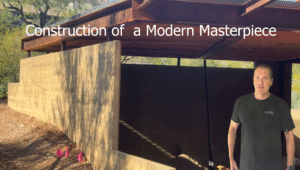
In the upper tier of luxury real estate, true value is no longer defined by size or finish alone. It is defined by vision, engineering, and architectural integrity. Bars and Bridges is a rare example of all three coming together in one uncompromising residence.
December Progress Update on a Rare Ultra Luxury Paradise Valley Home
Opportunities like this do not come around often. In this week’s progress update you will see the structure of a rare Paradise Valley estate emerging as the architect builder brings his vision to life. This home is available now before completion and every stage makes it more compelling.
Building Bars & Bridges: Three Days of Steel Installation in Ten Minutes
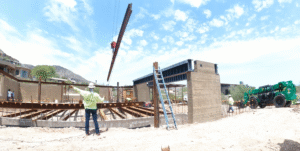
This ten-minute hyperlapse captures one of the most dramatic steps in creating the Bars & Bridges home—installing the massive steel structure that allows the residence to span a natural desert wash. A rare look at the craftsmanship behind a one-of-a-kind luxury estate.
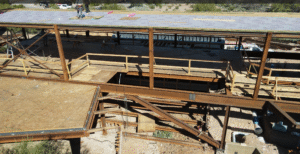
Bars & Bridges Progress: Behind the Build of a Desert Modern Masterpiece
See how this ultra-luxury home transforms as massive steel and concrete elements take shape. Watch the dramatic moment 15,000-lb beams are set to support a suspended pool.