
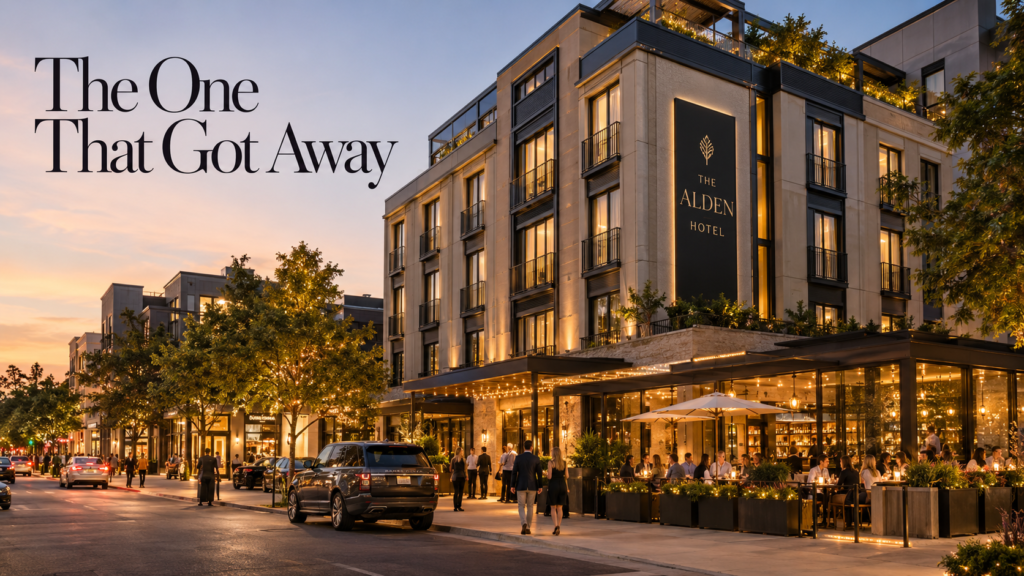
Last week I was in a meeting when the conversation turned to a hotel deal. Someone bought it, renovated it, and sold it two years later. The profit was $70 million.
Nobody at the table asked how. Everyone was quietly asking the same thing: why wasn’t that me?
Every developer has a version of that story. It usually goes something like this.
There’s a piece of land at the edge of a good neighborhood. It isn’t hidden. Thousands of cars pass it every day. It has good visibility, easy access, and the kind of location most developers would call desirable.
It has been available so long that people stopped seeing it.
Over the years, a few groups took a run at it. One drew up a modest hotel. Another penciled out an office building. Someone tried retail. There were renderings, budgets and meetings. Nothing got built. The concepts didn’t fit, the numbers didn’t work, and the money went somewhere else.
Eventually the property earned a reputation. “That one’s been around forever.” “We looked at it years ago.”
Meanwhile, the neighborhood kept getting better. Not all at once. A new residential community here. A restaurant there. Then an office campus, a renovated shopping center, an event venue drawing visitors from across the country. Values climbed. Every new project gave people another reason to visit, work, eat or stay nearby.
The land never moved. Everything around it did.
Then one day a developer, call him Daniel, drives past it on his way somewhere else. He remembers the site. He also remembers how much the area has changed. Back at the office, he puts an aerial photo from five years ago next to today’s. Then he starts counting.
He doesn’t ask how cheaply he can buy it. He asks what it can become now.
The old plans were reasonable for the neighborhood that existed when they were drawn. They were the wrong plans for the neighborhood that exists today. Daniel builds the right one. A few years later, it’s the most talked-about property in the area, and he sells it for a fortune.
Then the calls start.
“I remember that property.”
“We almost bought it.”
“We looked at it twice. Never could figure out what to do with it.”
At an industry dinner, someone finally asks him what he saw that everyone else missed.
“Nothing you couldn’t have seen,” Daniel says. “I just looked at it again.”
That’s the part that stays with people. They didn’t miss it because it was hidden. They didn’t miss it for lack of money or experience. They missed it because they made up their minds years earlier and never checked what had changed.
The property everybody knew. The opportunity almost nobody recognized. The one that got away.